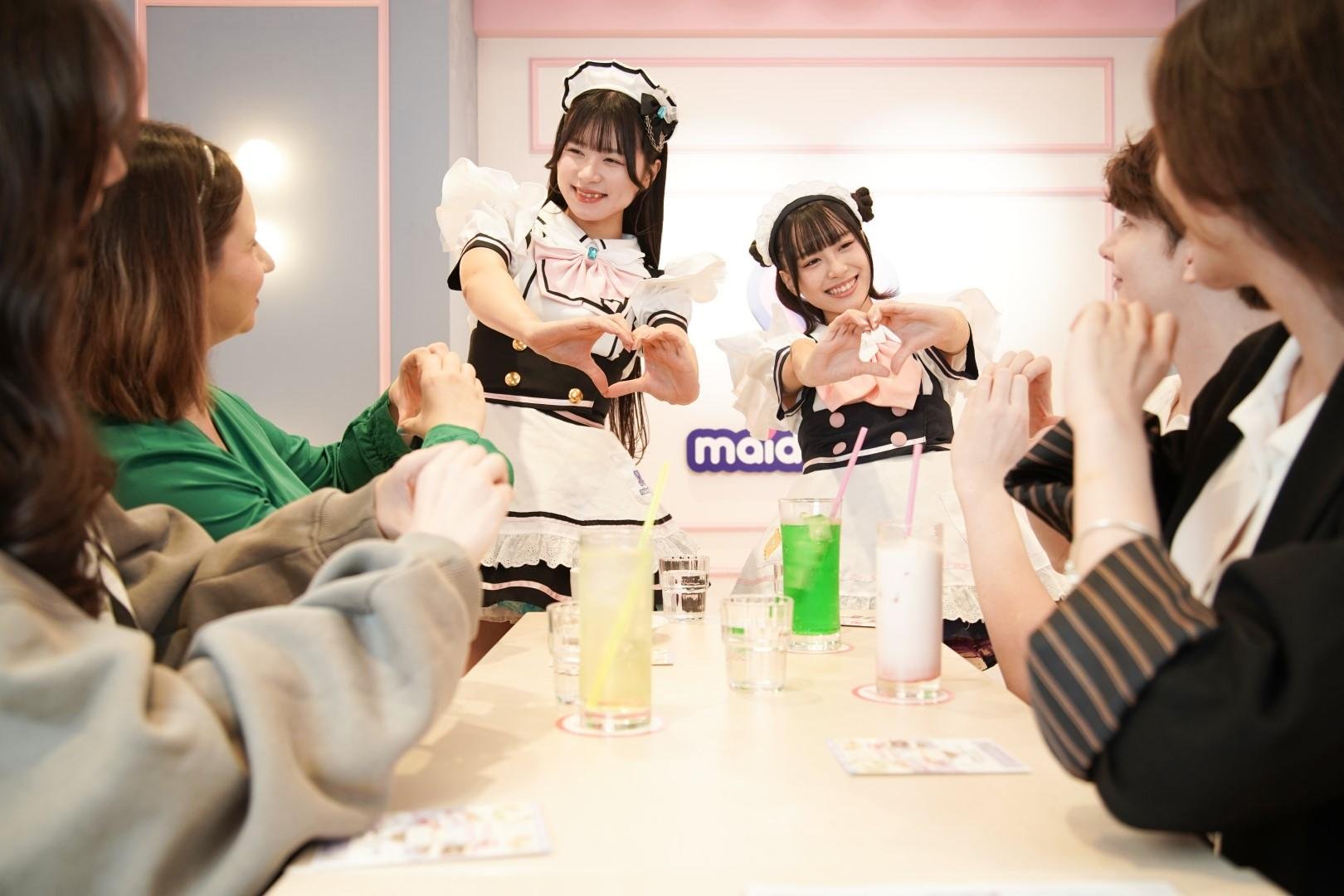
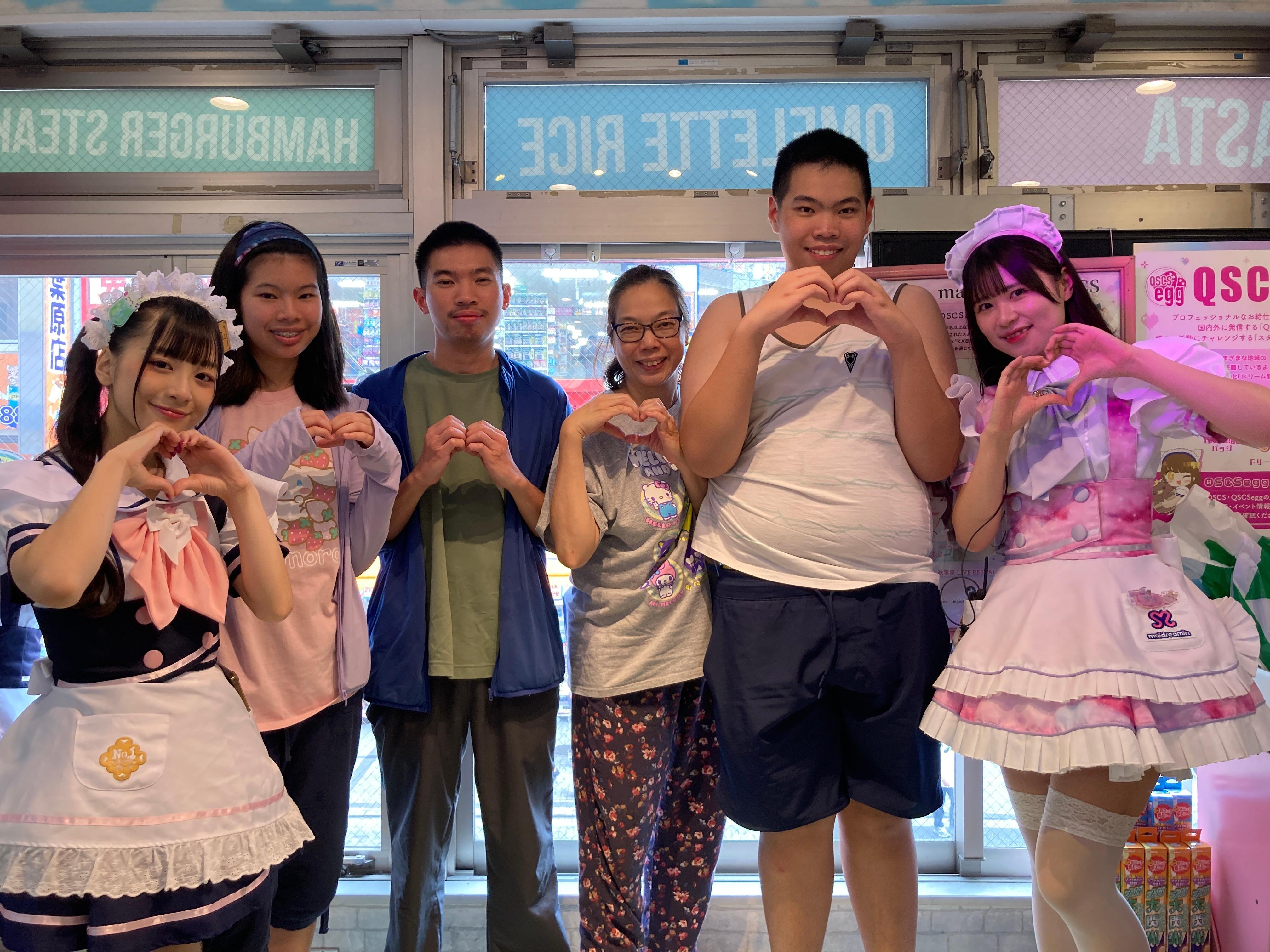
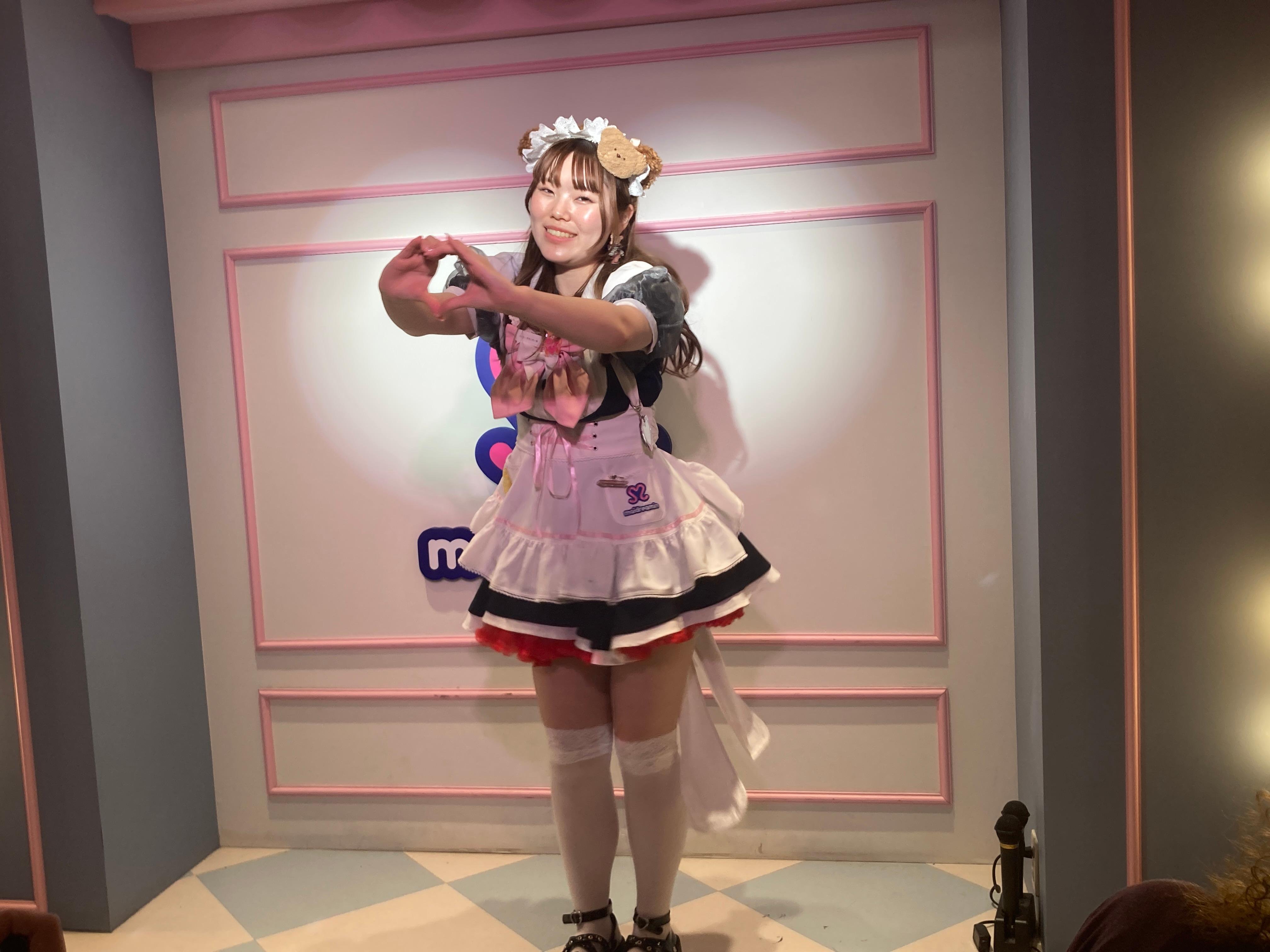
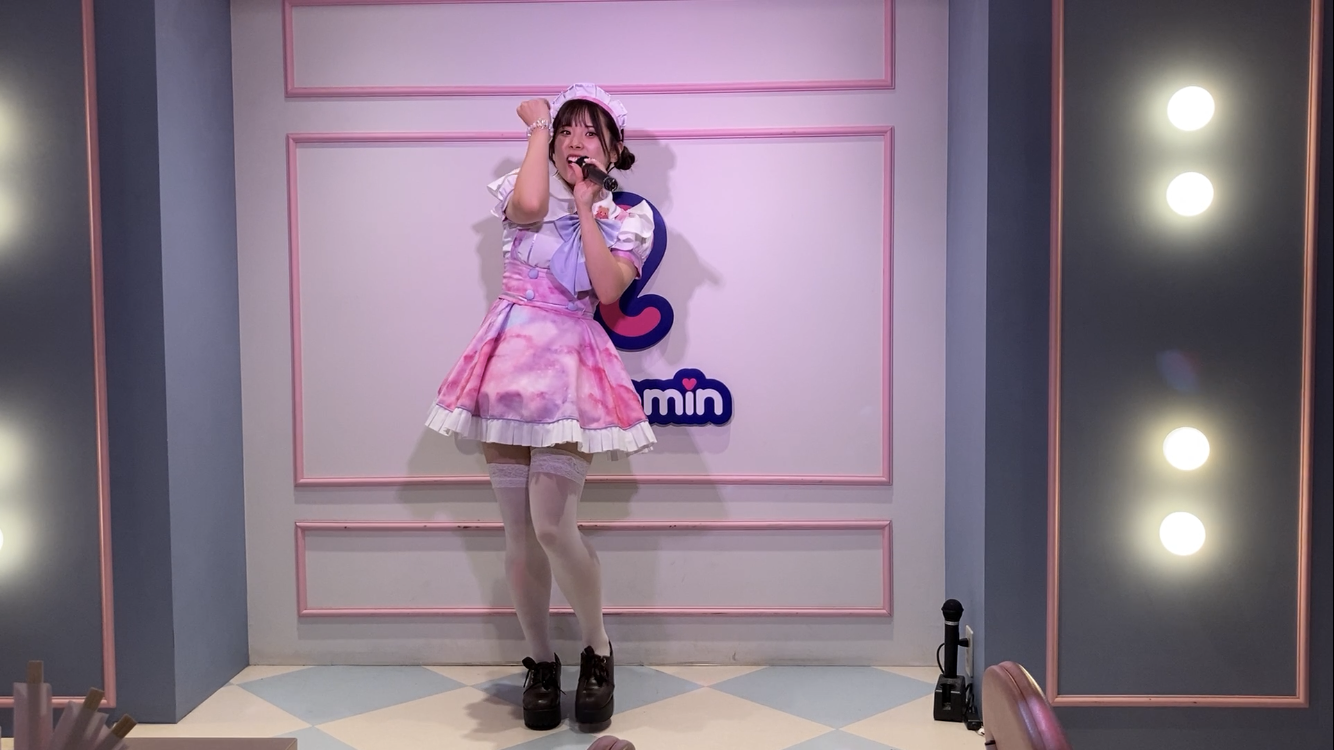
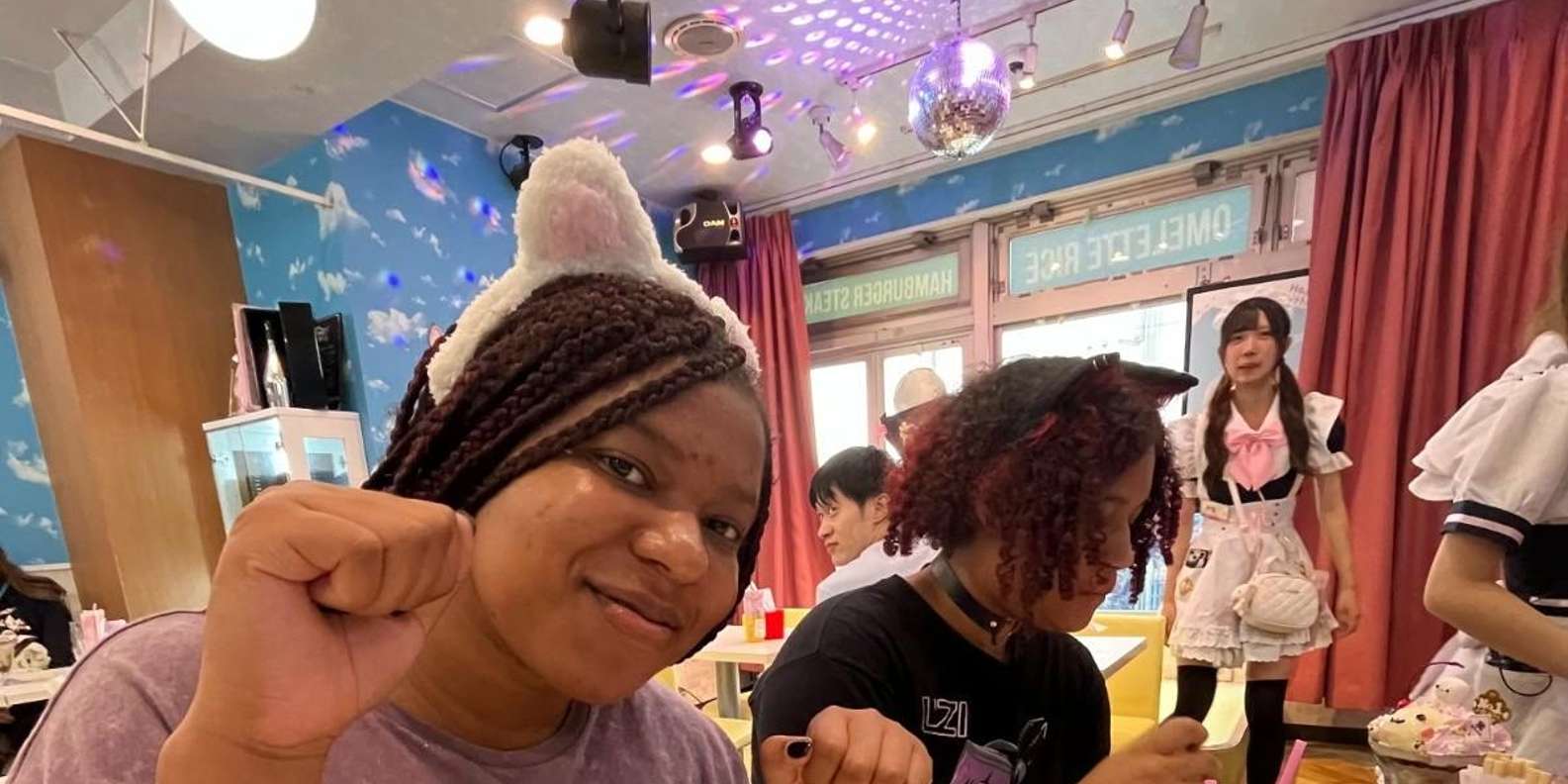
A maid café is a licensed restaurant with a costumed theme and table service. You pay an entry fee by the hour, you order something, staff in uniform serve you and do a short routine, and after an hour you leave. That is the whole of it, and the reason it needs saying is that most English-language pages either wink at the subject or refuse to describe it at all.
Two practical things follow, and they are the two things nobody writes down: what it costs, and what you may not photograph.
Check maid café tour dates
The money, from the chains’ own price pages
Both of the big Akihabara chains publish their prices, in English, on their own sites. The structure is the same at both: an hourly entry fee, then whatever you order.
The chain’s own guidance is that a visit runs ¥1,500–3,500 a head. In practice, budget ¥2,000–3,500 per person for an hour with a drink and something light, and ¥3,000–4,500 if you want the photo. Both chains are cash-and-card ordinary restaurants; there is no cover charge hidden on top.
Two figures still circulating on travel blogs are wrong. A “¥770 table charge” and an “¥880 photo” appear on dozens of pages; both are pre-2023 numbers that the chain itself revised. If a page is quoting those, it has not checked anything else either.
The hour is a real hour. @home café states plainly that stay time is limited to one hour, and that if you want to stay you request a “loop” — which restarts the session including the admission fee. maidreamin simply bills by the hour and extends at the same rate. Either way, hour two costs what hour one did.
The photography rule, which is the one that catches people
You may not photograph the maids. You may generally photograph the room. That is the rule at all three of the well-known houses, and the distinction is about people, not about the interior.
- maidreamin’s own FAQ is the clearest: stills and video are both fine provided no maid, no kitchen staff and no other guest is in the frame.
- @home café bans video outright and asks that you get a maid’s permission even to photograph your food.
- Cure Maid Café permits photographs, prohibits video, and asks you to respect no-photography signage on individual displays.
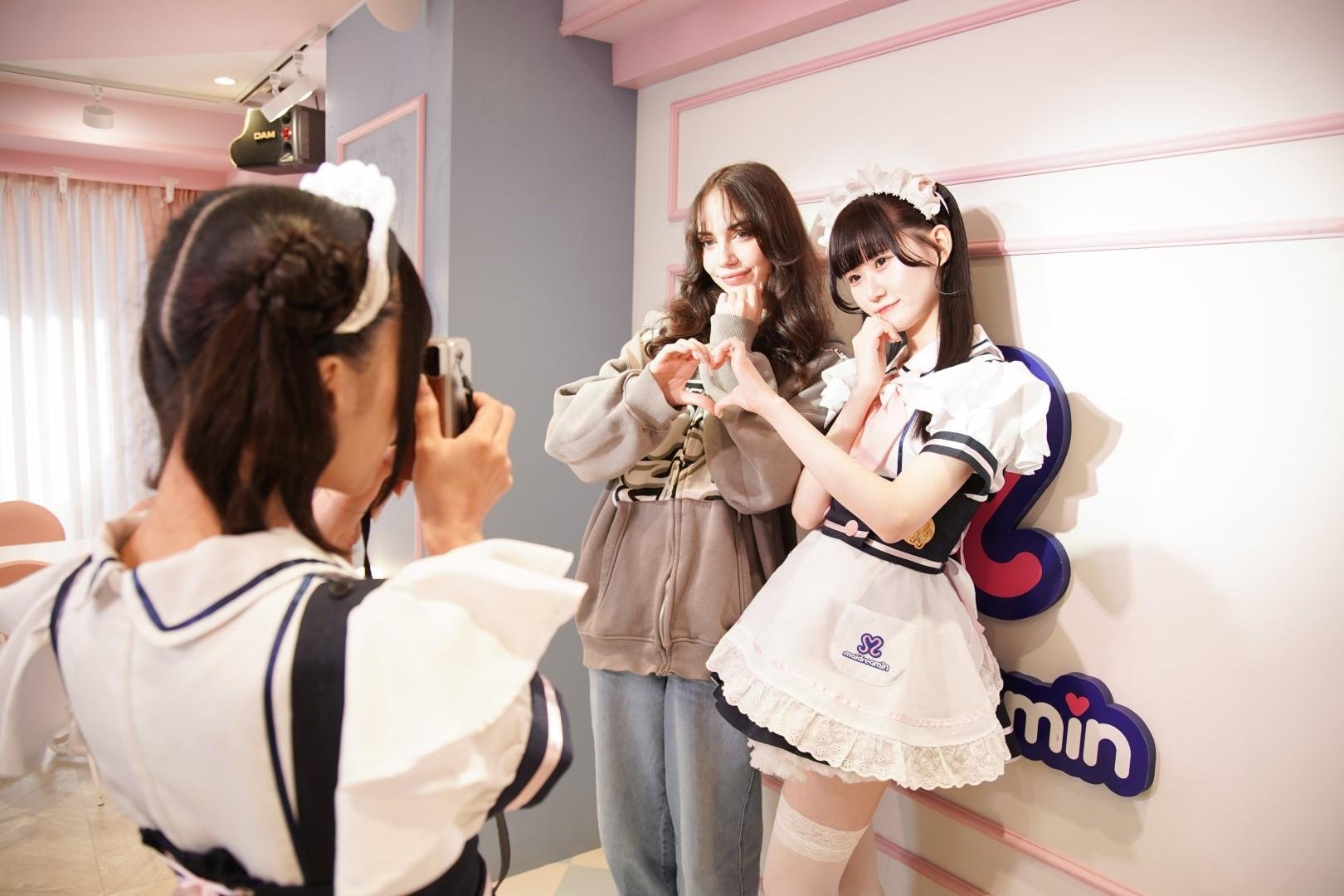
The sanctioned exception is the paid instant photo — a cheki, shot on Fujifilm Instax and often decorated by hand. It is a priced menu item: ¥850 at @home café, ¥1,100 at maidreamin, with surcharges at @home for specific staff. At events maidreamin caps it at three per visit.
If you take one thing from this page, take that: the photograph you want is a menu item, not something you take yourself. Nobody will be rude to you about it, but the rule is posted and it is enforced.
Compare the café inclusions
Why a tour is genuinely useful here — and where it is not
We are usually sceptical of tours in Akihabara, because the district is free to walk into. The maid café is the exception, for three specific reasons: the entry-fee-plus-order structure is not posted in English on the door even though both chains publish it online; the photography rule, the hour limit and the loop mechanic are all invisible from outside; and the street between you and the café is the actual problem, which is the next section.
Where a tour is not worth it: if you already know which café you want, it is a walk-in restaurant with a published price list. The five tours here that enter a café earn their money mainly because they pay the cover charge, not because they unlock anything.
What the featured tour actually is — read the brackets
The listing on this page is unusual and mildly confusing, and it is better to say so.
It is three products sold as one. Its inclusions read as a single block, but half the lines carry a bracket: one hour of admission, one drink and one photo — not for the Hidden Gems Tour, and two hours, a dessert and a live dance performance — only for the Maid Cafe All-Inclusive Tour. So the Hidden Gems version includes no café at all, and the All-Inclusive version is a longer, different café experience. Check which option you are selecting at checkout, because the listing’s title mentions a maid café regardless.
And the café does not appear in the published itinerary. That block names four shops — Radio Kaikan 10 minutes, the Tamashii Nations Store 50, Super Potato 30, Gee Store 30 — and stops. Two hours of retail. The café time exists only in the inclusions. It is almost certainly appended after the shops, but the operator has not published it that way and we are not going to invent a schedule.
One small pleasure in that itinerary: Gee Store’s building also holds Cure Maid Café on its fourth floor — opened in March 2001 and widely described as the first permanent maid café anywhere. It is a Victorian-styled tea house rather than a performance venue, still trading in 2026, Japanese-only on its website. It is not the café these tours use, and if the origin of the format interests you more than the show does, it is the one to walk into yourself afterwards.
The street, and the one rule that matters
This is the safety part, and it is more useful than anything else on the page.
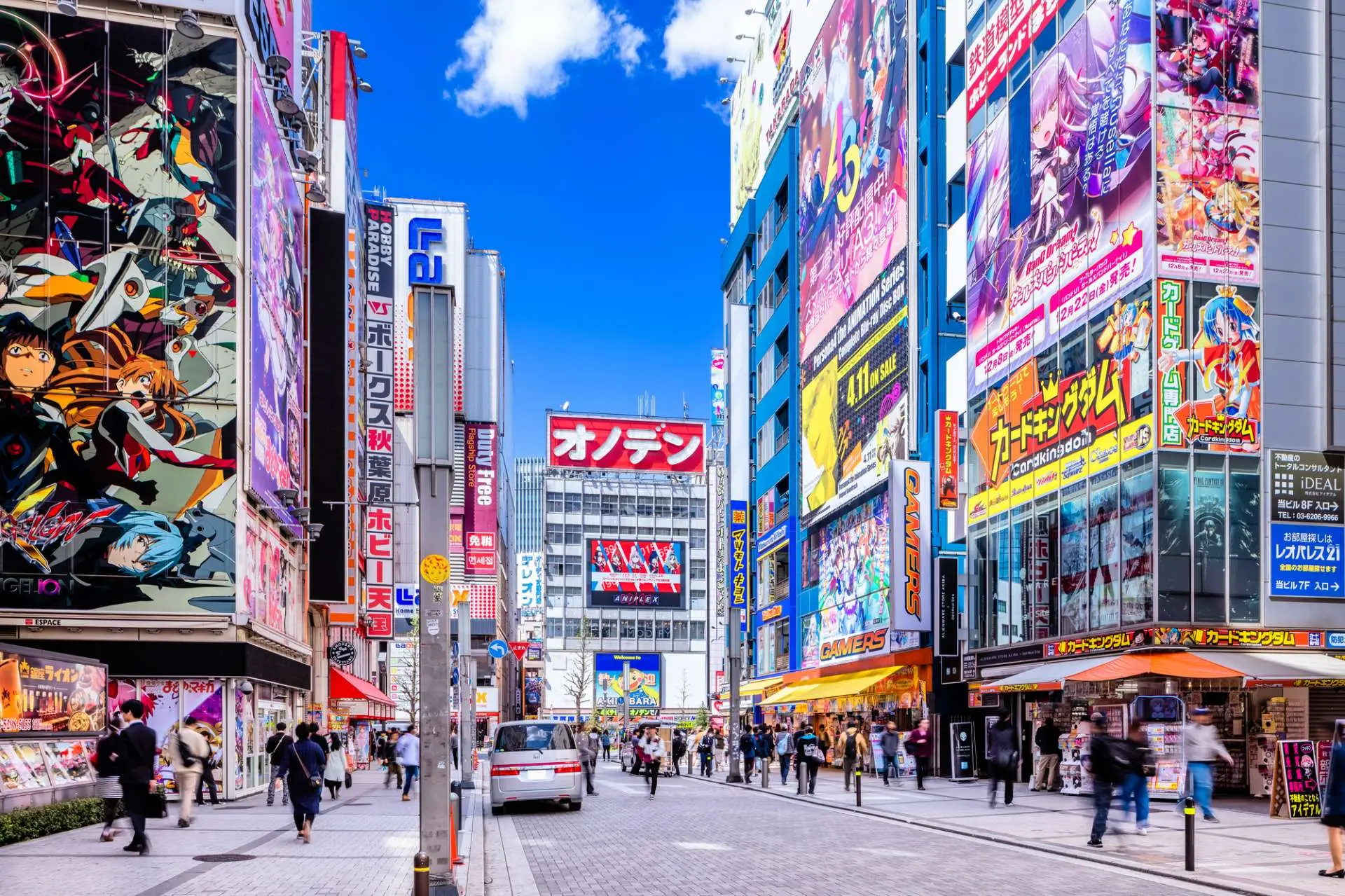
People hand out flyers for cafés on Chuo-dori. Some of them are not offering what they appear to be. In May 2021 the Tokyo Metropolitan Police raided five maid cafés in Sotokanda and arrested six operators for running a hospitality business without the licence it requires; reporting at the time described soft drinks costing about ¥200 being resold at ¥3,000–7,000 with conversation time bundled into the price. A newspaper investigation traced the wave to bar operators displaced from other districts by pandemic restrictions, who reopened in Akihabara behind maid branding. A further operator was arrested that December; five of its staff were under 18.
The response was regulatory and it is worth knowing where it landed:
- Chiyoda Ward has banned street touting in public places since 1 April 2014, and designated Akihabara a priority enforcement district on 13 July 2020. But the ward’s ordinance carries no penalty — its ladder runs guidance, then an order, then publishing the business’s name.
- The Tokyo metropolitan nuisance ordinance’s designated solicitation zones inside Chiyoda are Uchikanda and Kanda-Kajichō — not Sotokanda. Do not assume the stronger metropolitan rule covers Chuo-dori. It does not.
- The industry wrote its own code. Operators formed the Akihabara Concept Shop Association on 1 January 2022, after a joint ward-and-police safety project the previous June. Its agreement limits street promotion to one person, standing immediately outside that shop’s own entrance, and requires transparent posted pricing. Around seventy shops applied for certification. Membership is voluntary.
- National law tightened in 2025. An amendment to the Businesses Affecting Public Morals Regulation Act, in force from 28 June 2025, prohibits misrepresenting prices, serving items the customer did not order, and exploiting customers’ feelings — and raised the penalty for unlicensed hospitality operation to five years’ imprisonment or a ¥10 million fine.
- Tokyo’s consumer-affairs office published a warning in December 2024 about unitemised high bills at host clubs and concept cafés, and points people at the national consumer hotline, 188.
From all of which there is one clean rule you can actually use:
A shop’s own staff handing you a flyer immediately outside that shop’s door is normal and within the code. Anyone who walks you somewhere is not. The pattern the national consumer body documents is consistent — approached on the street, told it is cheap, presented with a large unitemised bill, then escorted to a nearby cash machine. If you are led anywhere, or if the venue is not the one printed on the flyer, that is the moment to stop. Look for the posted price board before you sit down; the reputable places have one.
This, rather than anything about the cafés themselves, is the best argument for going with a guide the first time.
What a maid café is not
Three corrections, because the search results around this subject are a mess.
It is not an adult venue. Mainstream maid cafés operate on an ordinary restaurant permit. The moment staff provide settai — sitting with a customer, sustained one-to-one attention, pouring drinks — the business requires a hospitality licence under the same law that governs cabaret clubs, and that is a different category of premises. The Akihabara industry association sorts its own members into family-friendly, general and adults-only (18+), which tells you the categories are real and that the family-facing cafés are not the 18+ ones. Venues on a hospitality licence may not trade between midnight and 06:00, and staff under 18 may not work past 22:00.
It is not the same thing as a “cuddle café”. Those existed: the first, Soineya, opened in Akihabara in September 2012, selling time lying beside a clothed member of staff from about ¥3,000 for twenty minutes, with physical intimacy explicitly excluded. Separate premises, separate business, nothing to do with a maid café. Seventeen such venues were searched by police in January 2013 over the employment of minors, and we could not confirm that any still operate in Akihabara.
And an evening session is not a family session. maidreamin’s own site switches after 20:00 to a bar format with all-you-can-drink plans. No age rule is published for it, but treat the evening as adult-oriented and take children in the afternoon.
So which one should you book?
- You want the café handled and the shops as a bonus? The featured $38.04 tour. It has the deepest review count of any Akihabara tour on the platform — 194 at 4.8 — and it puts an hour of admission, a drink and a photo inside the price. Select the standard version, not Hidden Gems.
- You want the café explained rather than just entered? The $53.89 three-hour tour on our Akihabara tour page includes the entry, the drink and the arcade fees, and its own itinerary gives the café leg nearly two hours.
- You want the fullest café version? The $82.42 tour whose café option bundles an hour of seating, a drink, a meal or a parfait and a commemorative photo — the most that any listing here puts inside the café.
- You have a shopping list and the café is incidental? The $93.83 private tour on our homepage visits one, but its exclusions line says food and drinks are not included. You will settle your own bill.
- You would rather do it alone? Entirely reasonable. Pick a chain with published English pricing, walk in, ignore anyone on the street, and check the price board before you sit.
- Travelling with children? Go in the afternoon, not the evening. Both chains publish child pricing and one issues a children’s card; the rules and the ages are in the questions below.
See live dates and prices
We are not affiliated with any café named on this page. This is an independent visitor guide with no affiliation to, endorsement from, or connection with maidreamin, @home café, Cure Maid Café, the Akihabara Concept Shop Association or any other business mentioned here. Café brands, anime titles and studio names are the trademarks of their owners and appear factually only; we use no character art and no company logo. Tours shown here are sold by GetYourGuide, and we earn a commission if you book through our links at no extra cost to you.
How these facts were checked
Written 10 August 2026.
- Supply, measured against the captured platform data rather than estimated: of 18 products, 2 name a maid café in the title, 7 mention one anywhere in their copy, and 5 describe actually entering one — one of which lists it as an optional stop. The other two only discuss maid cafés as part of the district. We have used the count of five for the tour lineup on this page.
- All prices, ratings, review counts, inclusions, exclusions and itinerary timings for the tours are the booking platform’s own, captured August 2026. The three-variants-in-one-listing structure, and the absence of the café from the itinerary block, are both in the listing as published — we have described them rather than tidying them up.
- Entry fees, age tiers, the one-drink rule, the one-hour limit, the “loop” mechanic and the cheki prices are from maidreamin’s and @home café’s own published price and FAQ pages, including their English-language sites. The ¥770 table charge and ¥880 cheki figures widely repeated online are stale — the chain’s own notice revised them in 2023, and we have printed the current numbers instead.
- The photography rules are from each chain’s own FAQ. maidreamin’s is published only in Japanese; @home café’s is available in English.
- Cure Maid Café’s March 2001 opening is from its own site, which states the founding year; the description of it as the first permanent maid café is the standard secondary account and we have attributed it that way rather than to the café. Its current 2026 trading, its hours and its address are from its own site. That it shares a building with Gee Store follows from the address it publishes, not from the tour listing.
- The May 2021 raids, the six arrests, the resold-drink pricing and the displaced-operator background are from Japanese newspaper reporting and contemporaneous coverage; the December 2021 arrest involving five under-18 staff is from the same body of reporting.
- The Chiyoda touting ordinance (in force 1 April 2014), the 13 July 2020 priority designation and the absence of any penalty are from Chiyoda Ward’s own pages and a comparative survey of ward ordinances. That the metropolitan solicitation zones in Chiyoda are Uchikanda and Kanda-Kajichō and not Sotokanda is from the Metropolitan Police’s own published notice. The Akihabara Concept Shop Association’s founding on 1 January 2022 and its one-person street-promotion rule are from the association’s own site. We could not find an official police or ward page that specifically warns tourists about being taken to a different venue than the one advertised — that pattern is documented by journalism and by the national consumer body’s general advisory, and we have attributed it that way rather than to the police.
- The licensing distinction between a restaurant permit and a hospitality licence, the midnight-to-06:00 restriction, the 22:00 rule for under-18 staff, and the 2025 amendment (in force 28 June 2025, penalties raised to five years or ¥10 million) are from the National Police Agency’s published material on the Businesses Affecting Public Morals Regulation Act.
- Soineya’s September 2012 opening and its published rates come from 2012 reporting and should be read as 2012-era figures. The January 2013 searches of seventeen venues under labour law are from Japanese press reporting. We could not verify whether any such venue still operates in Akihabara, and have said so rather than implying either answer.
- We found no published minimum age for daytime maid-café service at either chain, so we have not stated one; what both chains do publish is child pricing, which is the stronger evidence that children are expected.